


A Healthy Diet for Regular Running should give your body enough carbohydrates for energy, protein for recovery, healthy fats, fruits, vegetables and fluids. Build everyday meals around familiar foods such as rice, oats, whole grains, bananas, eggs, lentils, curd, vegetables, nuts and fish. You do not need a strict meal plan or special sports foods for every session. Instead, eat balanced meals regularly, drink enough fluids and adjust portions based on your training. What works best can vary between runners, so pay attention to how different foods affect your energy, digestion and recovery. How Do You Plan a Healthy Diet for Regular Running? Plan a healthy diet for regular running by balancing carbohydrates, protein, healthy fats, fruits, vegetables and enough fluids each day. Meal Focus Simple Choices Purpose Energy Rice, oats, banana, whole grains Fuel training Recovery Eggs, lentils, curd, fish Support muscles Daily nutrition Vegetables, fruits, nuts Provide key nutrients Hydration Water and suitable fluids Replace fluids Before training, choose familiar foods that are easy for you to digest. Afterward, combining carbohydrates with protein can help replenish energy and support recovery. For more food ideas, explore The Marathon Diet: What Elite Runners Eat to Perform at Their Best. Eat Well While Preparing for Kanavu A Healthy Diet for Regular Running can also support consistent preparation for a cross country event in Erode. Someone considering a race near Erode can practise their usual meals and hydration routine during training instead of experimenting on event day. Kanavu’s rural atmosphere gives it the character of a village sports event, while local participation creates the wider feel of a community fitness event. If you want to connect nutrition with training, recovery, footwear and overall fitness, explore Everything You Need to Know About Running and Staying Fit for a broader beginner-friendly guide. For practical guidance on choosing foods that support training, energy and recovery, explore the Johns Hopkins Runner’s Diet guide. Frequently Asked Questions (FAQs) 1. What Is the Healthiest Diet for Runners?A healthy diet for runners includes whole grains, fruits, vegetables, lean proteins and healthy fats to support energy, recovery and overall health. 2. Best Diet for Running StaminaEat carbohydrate-rich foods, protein and healthy fats to maintain energy, improve endurance and reduce tiredness during long runs. 3. Marathon Training Nutrition PlanA marathon nutrition plan includes balanced meals, enough carbohydrates, proper hydration and recovery foods to support long-distance running.

Best Foods for Runners to Stay Healthy
The Best Foods for Runners are foods that provide carbohydrates for energy, protein for muscle recovery, healthy fats, and enough vitamins and minerals for everyday health. Good choices include rice, oats, bananas, whole grains, eggs, milk or curd, lentils, vegetables, nuts, fish and lean meats. Runners do not need a complicated diet or expensive sports products for every session. A balanced meal made from familiar foods can support training and recovery. The amount you need depends on your distance, training intensity and individual needs, so focus on regular meals, enough fluids and foods that feel comfortable before and after running. What Are the Best Foods for Runners? The best foods for runners include carbohydrates for energy, protein for recovery, healthy fats, fruits, vegetables, and enough fluids. Food Group Simple Choices Main Role Carbohydrates Rice, oats, banana, whole grains Training energy Protein Eggs, lentils, curd, fish Muscle recovery Healthy fats Nuts, seeds, avocado Balanced nutrition Fruits & vegetables Seasonal produce Vitamins and minerals Fluids Water and suitable drinks Hydration The Foods for Runners are usually the ones you can eat consistently and digest comfortably. For more race focused nutrition ideas, read The Marathon Diet: What Elite Runners Eat to Perform at Their Best. Fuel Your Training for Kanavu Preparing for a cross country event in Erode means giving your body enough fuel for regular training. If you are looking for a race near Erode, Kanavu can provide a practical goal for applying those nutrition habits during preparation. Its countryside setting also brings the character of a village sports event. Local participation adds to the atmosphere of a community fitness event. To connect nutrition with stamina, breathing, recovery and everyday training habits, continue with Best Running Tips to Improve Stamina, Energy and Health. For more detailed guidance on everyday runner nutrition, explore the Johns Hopkins Runner’s Diet guide, which covers carbohydrates, protein, healthy fats, fruits and vegetables. Frequently Asked Questions (FAQs) 1. Which foods increase stamina? Bananas, oats, whole grains, nuts and eggs help support stamina by providing energy, protein and essential nutrients for running. 2. What should I eat during a run? During long runs, eat bananas, energy gels or dates for quick energy. Drink water regularly to stay hydrated and maintain performance. 3. What are the best carbs for running a marathon? Rice, oats, potatoes, pasta and whole grains provide carbohydrates that help runners store energy and maintain endurance during marathons.
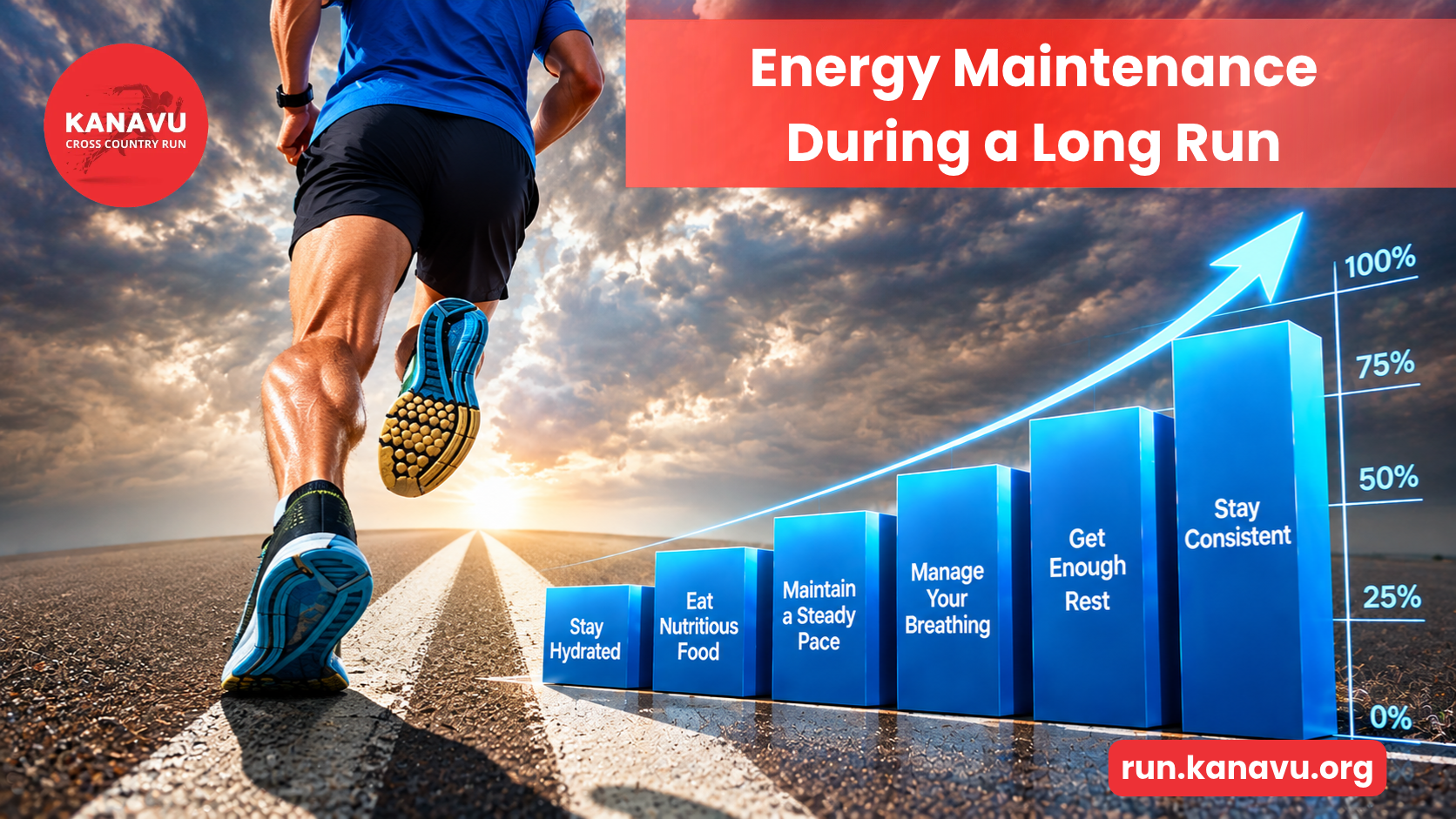
Tips to Maintain Energy During a Long Run
The best Tips to Maintain Energy during a long run are to start at a comfortable pace, eat well beforehand, stay hydrated, and avoid using too much effort in the early part of your session. Your body needs a steady supply of fuel and fluids as the distance increases, so preparation matters before you start moving. Choose familiar foods before training and carry water or suitable fuel when the distance requires it. Beginners should build longer sessions gradually rather than suddenly doubling their usual distance. Saving energy early can help you feel more controlled and comfortable later in the run. If the first part feels unusually hard, slow down instead of trying to maintain an unrealistic pace. What Are the Best Tips to Maintain Energy? Maintain energy by starting at an easy pace, eating before the run, staying hydrated, using familiar fuel, and managing effort throughout. Stage What to Do Why It Helps Before the run Eat familiar food and hydrate Helps you begin with enough fuel and fluids First few kilometres Start at an easy pace Prevents wasting energy too early During the run Sip fluids when needed Supports hydration during longer efforts Longer sessions Use familiar fuel if required Helps maintain available energy When feeling tired Reduce pace and relax breathing Helps control effort After the run Rehydrate, eat and recover Supports recovery after training Follow these simple habits during longer runs to manage your effort, maintain energy and stay comfortable from start to finish. Energy management also depends on recovery, nutrition and gradual training. Our How to Maintain Body for a Marathon guide explains how these habits support longer-distance preparation. Manage Your Energy for the Kanavu Run Preparing for a cross country event in Erode may require extra attention to pace because natural terrain can change how hard each section feels. For runners looking for a race near Erode, Kanavu provides a countryside setting where steady effort can be more useful than starting fast. The rural atmosphere also gives participants the feel of a village sports event. Wider local involvement adds the experience of a community fitness event. To strengthen your overall routine, explore Best Running Tips to Improve Stamina, Energy and Health for guidance on endurance, recovery, breathing and consistent training. For more information on hydration during endurance exercise, read the American College of Sports Medicine guide to hydration and electrolytes. ACSM notes that longer-duration endurance athletes, particularly in heat, need to pay closer attention to fluid and electrolyte balance.

How to Improve Breathing Control While Running
Improving Breathing Control While Running starts with slowing your pace, relaxing your upper body, and taking deeper, steady breaths instead of short, rushed ones.Your breathing naturally becomes faster as effort increases, so the goal is not to force a fixed pattern throughout every session. Beginners should start at a comfortable pace where breathing feels manageable and gradually increase intensity. Diaphragmatic, or “belly,” breathing can also help runners use their breathing muscles more effectively. If you are constantly gasping, reduce your pace until your breathing becomes controlled again. How Can You Improve Breathing Control While Running? Improve breathing control while running by slowing your pace, relaxing your shoulders, breathing deeply, and matching your breathing to your effort. The American Lung Association notes that belly breathing and rhythmic breathing can help runners develop more efficient breathing patterns. Your posture can also affect how relaxed you feel while moving. Read How to Improve Running Form: Simple Tips for Beginners for practical technique advice. Practise Better Breathing Before Kanavu Good Breathing Control While Running becomes especially useful when preparing for a cross country event in Erode, where slopes and changing terrain can alter your effort. Someone searching for a race near Erode can use the Kanavu Cross Country Run as a goal for practising controlled pacing. Its countryside atmosphere also gives runners the experience of a village sports event. The wider participation adds the spirit of a community fitness event. To improve your overall running routine, focus on a few simple areas: For more practical guidance on these areas, explore Best Running Tips to Improve Stamina, Energy and Health. If you want to practise better breathing during your runs, the American Lung Association’s Breathing Basics for Runners guide explains simple techniques that can help you manage your breathing more comfortably.
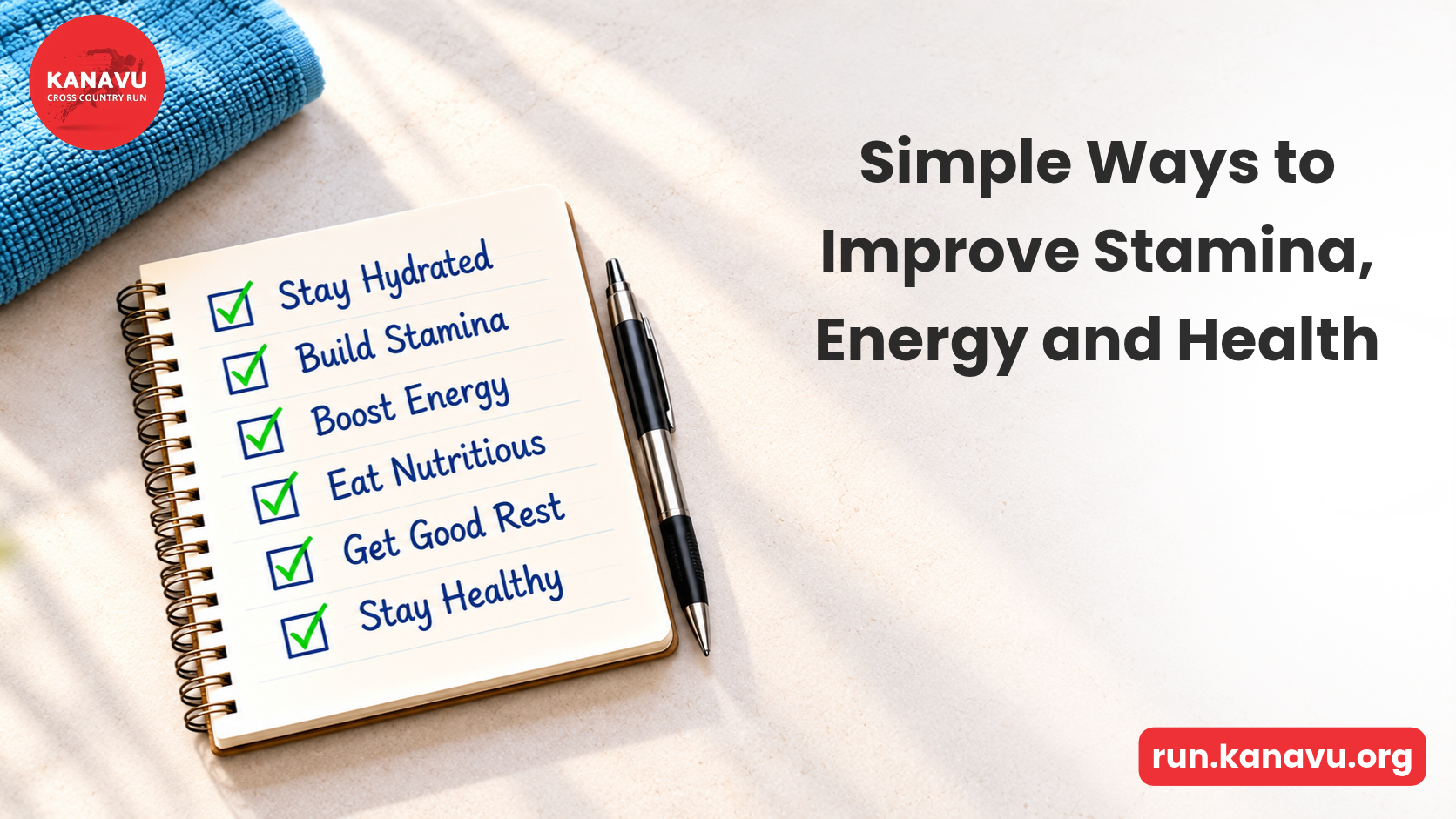
Best Running Tips to Improve Stamina, Energy and Health
1. How to Improve Breathing Control While Running? Learn simple breathing techniques while running to improve breathing control, reduce tiredness and run comfortably for longer distances. 2. Tips to Maintain Energy During a Long Run Discover easy tips to maintain energy during a long run with proper pacing, healthy snacks, hydration and simple habits to avoid tiredness. 3. Best Foods for Runners to Stay Healthy Explore the best foods for runners to improve energy, support muscle recovery and stay healthy with simple nutrition tips for daily running. 4. How to Plan a Healthy Diet for Regular Running? Learn how to plan a healthy diet for regular running with balanced meals, nutritious foods and simple eating habits to support energy and fitness. 5. How Much Water to Drink Before Running?: A Hydration Guide Find out how much water to drink before running and learn simple hydration tips to stay refreshed, prevent dehydration and support your runs. 6. Simple Tips to Build Running Stamina and Reduce Tiredness Discover simple tips to build running stamina, reduce tiredness and improve endurance with easy training methods, proper rest and healthy habits. Also Read: According to the American College of Sports Medicine, proper hydration helps support exercise performance and recovery. Explore the best workouts for running to improve strength, build stamina and increase endurance through simple training exercises.

Does Running Improve Heart Health and Blood Circulation?
Does Running Improve Heart Health and blood circulation? Yes, running is a simple way to keep your heart healthy and improve blood flow throughout your body. When you run regularly, your heart becomes stronger and pumps blood more efficiently, helping deliver oxygen and nutrients to your muscles and organs. Running can also help manage blood pressure, improve stamina, and reduce the risk of heart disease. Even a short, comfortable run a few times a week can make a positive difference to your overall heart health. Start at an effort where you can still speak comfortably and increase intensity gradually. Does Running Improve Heart Health? Yes. Regular running can improve cardiovascular fitness, support healthy blood pressure, and help blood circulate more efficiently throughout the body. Consistency matters more than trying to run hard every day. For help choosing a training time you can maintain, read Morning vs Evening Run: Which Is Best for Your Health and Fitness?. Build Heart Fitness Through the Kanavu Run Regular training becomes more meaningful when you have a goal to work toward. Someone preparing for a cross country event in Erode can gradually build endurance through easy, consistent sessions. If you are searching for a race near Erode, the Kanavu Cross Country Run offers an organised rural setting where runners can put that preparation into practice. Its local participation gives it the feel of a community fitness event, while the countryside route creates a memorable village running experience. For more beginner guidance on workouts, shoes, timing and fitness, explore Everything You Need to Know About Running and Staying Fit. Running does not need to begin with long distances. Start steadily, allow recovery and give your heart and body time to adapt. For more evidence-based heart and exercise guidance, explore the American Heart Association’s Endurance Exercise guide.
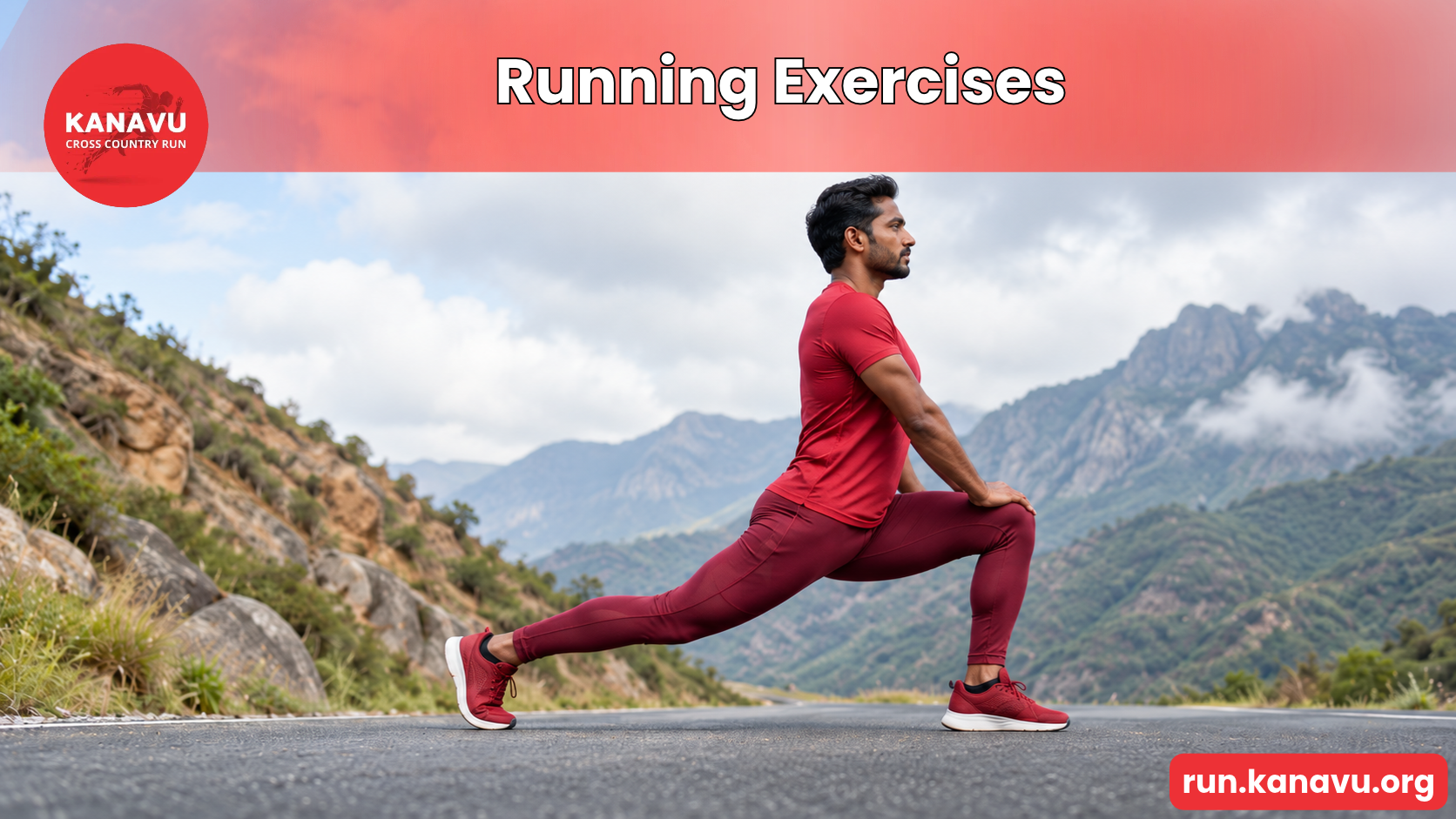
Best Running Exercises to Improve Strength and Fitness
The Best Running Exercises for improving strength and fitness are squats, lunges, calf raises, glute bridges, step ups and planks. These movements strengthen the legs, hips, calves and core, which can support better balance and control while running. Beginners do not need a complicated gym routine to benefit. Start with simple bodyweight exercises, focus on correct form and increase the difficulty gradually. Adding strength work once or twice a week can complement regular running without making training overwhelming. The goal is not to lift heavy from the start, but to build a stronger body that can handle everyday runs more comfortably. Good technique matters more than doing a high number of repetitions. What Is the Best Running Exercise for Beginners? There is no single movement that trains everything. A balanced routine should work several muscle groups: These Running Exercises can complement regular sessions rather than replace them. Begin with movements you can perform comfortably and give your muscles time to recover. Better strength also supports more controlled movement. For technique tips, read How to Improve Running Form: Simple Tips for Beginners. Why Does Strength Matter for Kanavu? Strength becomes especially useful when preparing for a cross country event in Erode, where natural surfaces may demand more balance and control. If you are looking for a race near Erode, the Kanavu Cross Country Run gives you a practical goal for combining fitness work with regular training. Its rural setting also creates the atmosphere of a village sports event, while local participation makes it a wider community fitness event. For more guidance on workouts, footwear, health and beginner fitness, continue with Everything You Need to Know About Running and Staying Fit. Strength work does not have to be complicated. Start with basic movements, practise consistently and build gradually. For more guidance on building strength safely as a runner, explore the World Athletics Strength & Conditioning for Beginners guide for practical exercises and training advice.

7 Best Workouts for Running to Improve Speed, Strength and Endurance
Doing the same session every day may improve consistency, but combining different exercises can develop speed, strength and stamina more effectively. The Best Workouts for Running include easy sessions, intervals, hills, longer efforts and strength exercises. Beginners do not need to perform all seven in one week. Choose a few based on your current fitness, leave enough time for recovery and gradually increase the challenge. Hard sessions should feel purposeful, not exhausting. Keep easier days between demanding efforts. What Are the 7 Best Workouts for Running? Each workout supports a different part of your fitness, from speed and endurance to strength and recovery. Runners preparing for a cross country event in Erode can especially benefit from including hills and varied surfaces because outdoor terrain may require frequent changes in effort. For more technique basics, explore our Everything You Need to Know About Running and Staying Fit How Should Beginners Combine These Workouts? The Best Workouts for Running work better when they are balanced rather than packed into consecutive days. Start with easy sessions, add one challenging workout, and allow enough recovery before increasing intensity. If you are looking for a race near Erode, the Kanavu Cross Country Run gives your training a practical goal. Its rural setting also creates a memorable village sports event, while strong local participation gives it the feel of a community fitness event. If you’re just getting started, our Everyday Running Guide for Beginners can help you build simple habits for better form, steady progress and recovery. A balanced routine should combine aerobic movement with strength work rather than focusing only on speed. WHO also recommends regular aerobic activity alongside muscle-strengthening exercise for adults.

Morning vs Evening Run: Which Is Best for Your Health and Fitness?
There is no single time that works best for every runner. When comparing Morning vs Evening Run: Which Is Best, the better choice is usually the time you can follow consistently. Early sessions can fit well before work or study and may feel cooler, while later sessions allow your body more time to wake up and may feel easier for harder efforts. Research has not established one universally superior time for health or fitness improvements. Choose a schedule you can maintain regularly rather than forcing a time that leaves you tired or inconsistent. Morning vs Evening Run: Which Is Best for Beginners? The best time to exercise depends on your routine, energy, weather, and personal comfort. Earlier Session Later Session Easier to finish before a busy day Body may already feel more active Often cooler outdoors Can help release stress after work Requires an earlier wake-up May interfere with bedtime if very late Works well for routine building Useful when mornings feel rushed Your exercise performance may also change throughout the day, so try both options for a week or two before deciding. If early sessions suit you, our Morning Running Tips for Beginners can help you build the habit gradually. Which Time Fits Your Daily Routine? Choose a running time that suits your daily routine, work schedule, and weather. Try to run at the same time every day and get enough sleep to stay healthy and active. Consistency matters more than chasing a perfect clock time. Consider your work schedule, meal timing, weather, and sleep quality. A routine that repeatedly reduces your rest is unlikely to feel sustainable. For more help building everyday habits, explore the Everything You Need to Know About Running and Staying Fit Build a Consistent Routine for the Kanavu Run Once you know when you feel most comfortable, practise at that time regularly. If you are preparing for the Kanavu Cross Country Run or searching for a race near Erode, consistent training can help you arrive feeling more familiar with your pace and energy. Whether you prefer sunrise or later-day training, the right choice is the one that keeps you active, rested, and ready to return for the next session. For research on exercise timing and health or performance outcomes, see this systematic review on time-of-day training.

Everything You Need to Know About Running and Staying Fit
1. What Is a Cross Country Run? A Complete Guide for Beginners Explain what cross-country running means, how the terrain differs from normal road running, what beginners can expect, and why outdoor routes can offer a different running experience. 2 . Morning vs Evening Run: Which Is Best for Your Health and Fitness? Compare morning and evening sessions based on routine, energy, weather, sleep, and consistency so runners can choose a time that fits their daily life 3. 7 Best Workouts for Running to Improve Speed, Strength and Endurance Cover useful training options such as easy runs, intervals, hill sessions, strength work, and recovery sessions that support different parts of running fitness. 4. Which is the Best Running Shoes for Beginners and Regular Runners Help runners understand fit, comfort, cushioning, terrain, and shoe type so they can make a more suitable choice for regular training. 5. Best Running Exercises to Improve Strength and Fitness Introduce simple exercises for the legs, core, balance, and mobility that can complement regular running and support stronger movement. 6. Does Running Improve Heart Health and Blood Circulation? Explain how regular aerobic activity supports cardiovascular fitness, circulation, and everyday health while helping beginners understand the value of consistent exercise. source https://worldathletics.org/personal-best Also read : Beginner Running Event at Kanavu Cross Country Run That Welcomes Non Runners and First Timers